

Keynote Speakers
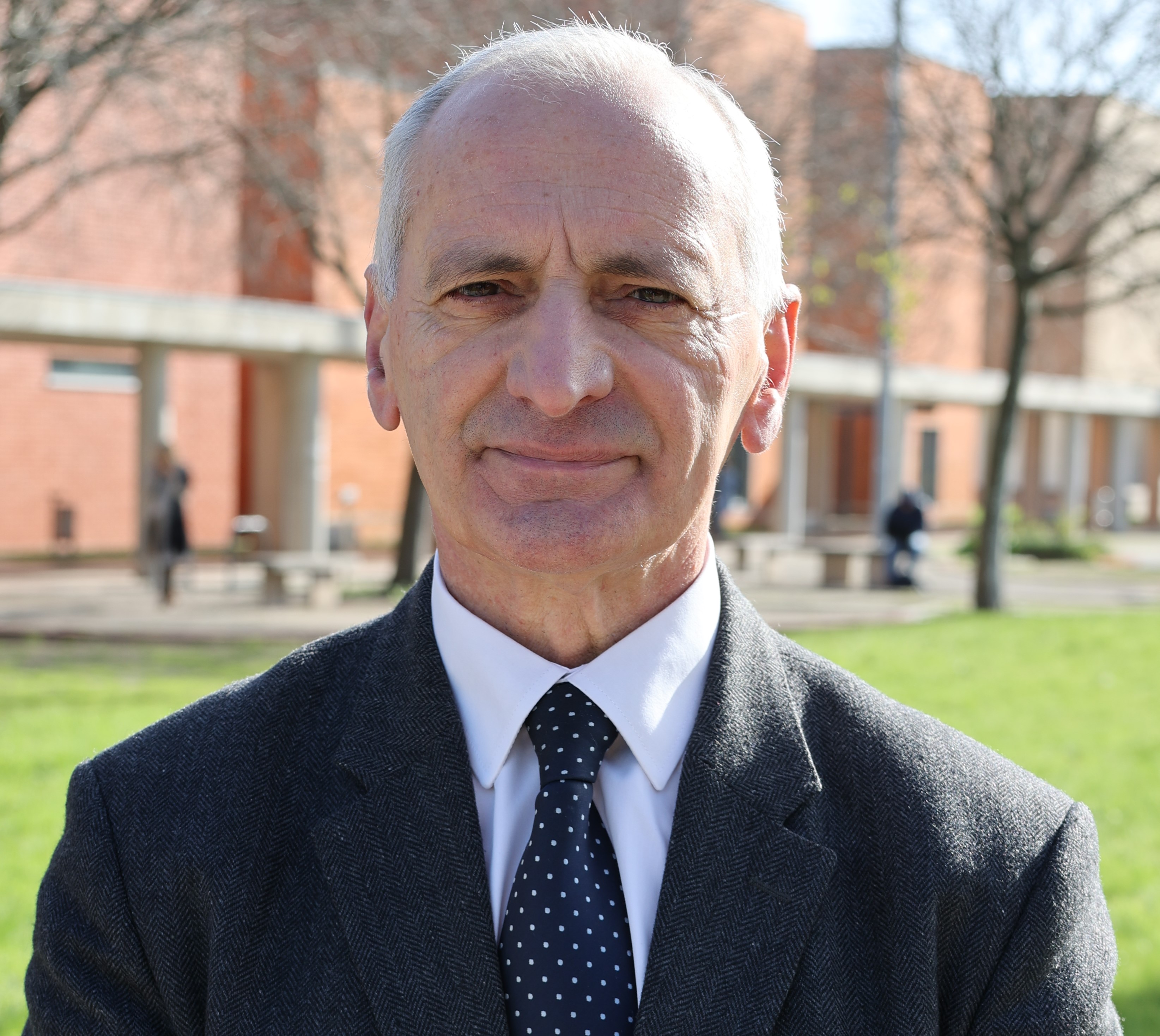 |
| Prof. Mário F. S. Ferreira (OSA/SPIE Committee), University of Aveiro, Portugal |
| Biography: Mário F. S. Ferreira is a Professor at the Physics Department of Aveiro University, Portugal. Between 1990 and 1991 he was at the University of Essex, UK, performing experimental work on external cavity semiconductor lasers and nonlinear optical fiber amplifiers. His research interests have been concerned with the modelling and characterization of multi-section semiconductor lasers for coherent systems, quantum well lasers, optical fiber amplifiers and lasers, optical sensors, soliton propagation, polarization and nonlinear effects in optical fibers. He has been the leader of the Optics and Optoelectronics Group of the I3N – Institute of Nanostructures, Nanomodelling and Nanofabrication. He has written about 400 scientific journal. and conference publications, and several books, namely: “Optics and Photonics” (Lidel, 2003, in Portuguese), “Topics of Mathematical Physics” (Editora Ciência Moderna, 2018, Brazil, in Portuguese), “Optical Fibers: Technology, Communications and recent Advances” (Ed., NOVA Science Publishers, 2017), “Advances in Optoelectronic Technology and Industry Development” (CRC Press, 2019), “Nonlinear Effects in Optical Fibers” (John Wiley & Sons, OSA, 2011), “Optical Signal Processing in Highly Nonlinear Fibers” (CRC Press, 2020), “Optical Fiber Technology and Applications – Recent Advances” (IOP Publishing, 2021), “Solitons in Optical Fiber Systems” (John Wiley & Sons, 2022), “Dissipative Optical Solitons” (Springer, 2022), “Photonic Crystal Fibers - Recent Advances” NOVA Science Publishers, 2023, “Specialty Optical Fibers - Materials, Fabrication Technology and Applications” (Elsevier, 2024),“Optical Fiber Lasers - Recent Advances and Applications” (to be published by Springer Nature, 2025), and “Lasers Optics and Photonics” (to be published by Oxford University Press, 2025). He was the Guest Editor of four Special Issues of “Fiber and Integrated Optics” (Taylor & Francis): “Fiber Optics in Portugal” (2005), “Nonlinear Fiber Optics” (2015), “Optical Fiber Sources and Amplifiers” (2020) and “Quantum Communications” (2020), a joint Special Issue of “Optics Express” and “Applied Optics” (OSA) on “Optical Sensors and Sensing 2019”, one Special Issue of the “Journal of Nonlinear Mathematical Physics” (Springer) on “Complex Ginzburg-Landau Equation”, and two Special Issues of “Fibers” (MDPI) on “Optical Fiber Communications” and “Specialty Optical Fibers – Material, Fabrication and Applications” (2022), and and two Special Issues of “Fibers” (MDPI) on “Optical Fiber Communications” (2020) and “Characterization and Applications of Specialty Optical Fibers” (2025). He is a Fellow and a Travelling Lecturer of both OPTICA (Optical Society of America) and SPIE - The International Society for Optics and Photonics, and a Member of IEEE. He served in various committees of OSA/OPTICA and of SPIE, as well as in the organizing and scientific committees of various international conferences. Actually, he serves also as an Associate Editor or as an Advisor Board Member of several international journals. |
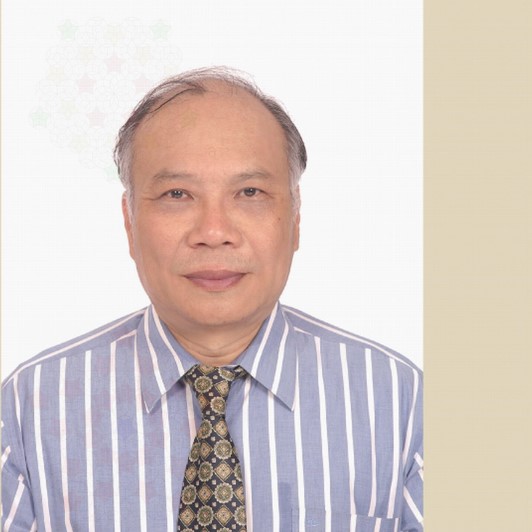 |
| Prof. Chung Yuan Kung National Chung Hsing University, Taichung, Taiwan, China |
| Biography: Dr. Chung Yuan Kung is Professor Emeritus in the Department of Electrical Engineering at National Chung Hsing University, Taichung, Taiwan. He earned his BS (1969) and MS (1972) in Physics from National Tsing Hua University, an MS in Physics from the University of Alabama in Huntsville (1974), and a PhD in Materials Science from Northwestern University (1979). After postdoctoral research at Georgia Tech and Lawrence Livermore National Laboratory and six years in the U.S. semiconductor industry with Fairchild and National Semiconductor, Dr. Kung joined Taiwan’s ITRI in 1987 and served on NCHU’s faculty from 1991 until his retirement in 2016. His 2024 publications represent a culmination of decades spent unraveling the deep connections between geometry and materials. Title: From the two-dimensional geometry of Penrose tiling to the physical problems of three-dimensional quasicrystals |
 |
| Prof. Shixiang Xu, Shenzhen University, China |
| Biography: Shixiang Xu, born in 1965, completed his PhD in 1998 from Shanghai Institute of Optics and Fine Mechanics, China. His current position is a professor of Shenzhen University. Now, he also serves as a member of Laser Professional Committee of Chinese Optical Society, and one of the Councils of Guangdong Optical Society of China. In 2006, he was awarded Shanghai Pujiang talent Fund. In 2023, He has gained the First Prize of Shanghai Technical Invention. Up to date, has gained about 20 funds at National, provincial and ministerial-level, and has published more than 180 papers in peer-reviewed journals and authorized more than 30 patents. His research interests include ultrashort pulse laser, ultrafast imaging, terahertz optics, and manipulation of light field. |
 |
| Prof. Gefeson Mendes Pacheco, Technological Institute of Aeronautics, Brazil |
| Biography: Prof. Gefeson is currently a full professor at the Technological Institute of Aeronautics, ITA. He holds a Bachelor's degree in Physics from the State University of Rio de Janeiro (1985), a Master's degree in Electronics and Computing Engineering from the Technological Institute of Aeronautics (1989), and a Ph.D. in Space Science from the National Institute for Space Research (1994). He is currently developing international cooperation with the European Space Center, ISAE, in Toulouse, France, and with universities in India, carrying out joint orientations and publications. He has experience in the microwave, photonics, lasers, optoelectronic devices, and innovation. He developed several systems of interest in the areas of aeronautics and space as microwave signal spectrum analyzers, for space research, laser ultrasound system, for non-destructive testing of materials for aeronautical use such as aluminum and composite materials, photonic generation systems of microwave signals and photonic receivers, to distributed receiving stations. He worked actively in the professional master's joint program at ITA and the Brazilian Aviation Company, EMBRAER, as a dissertation advisor. He is working in developing technology for optical fiber sensors, optical microwave signal generation, unmanned aerial vehicles in telemetry & guidance, and photovoltaic generation as a complementary energy source for aircraft with electric motors. He created and reactivated microwave, photonics, and computational electromagnetism laboratories. He is a consultant for federal and state agencies in programs aimed at technological development. He has administrative experience as a research projects manager, coordinator of an undergraduate course in Electrical Engineering, and head of the Microwave and Opto-Electronics Department of the Electronic Engineering Division at ITA. Published more than 60 papers in peer-reviewed magazines and congress proceedings, held two patents, advised more than 20 master's and doctoral works, and is a reviewer for different international magazines. |
Prof. Jun Chang, School of Information Science and Engineering Key Laboratory of Education Ministry for Laser and Infrared System Integration Technology Shandong University, Qingdao, China
Biography: Jun Chang received the degrees of Master of engineering and Doctor of engineering from department of optical engineering of Shandong University, China in 1991, 2006. He was assistant researcher and associate researcher in Analytical and Test center of Shandong Province, China from 1991 to 2003, he was a visiting fellow in University of new South Wales from 2004 to 2005, he was researcher in laser institute of Shandong Academy of Science from 2005 to 2007, he was associate professor and then professor in School of Information Science and Engineering of Shandong University from 2007. His research interests include fibre-optics,photonic Sensors and application.
|
| Prof. Jun Chang, School of Information Science and Engineering Key Laboratory of Education Ministry for Laser and Infrared System Integration Technology Shandong University, Qingdao, China |
| Biography: Jun Chang received the degrees of Master of engineering and Doctor of engineering from department of optical engineering of Shandong University, China in 1991, 2006. He was assistant researcher and associate researcher in Analytical and Test center of Shandong Province, China from 1991 to 2003, he was a visiting fellow in University of new South Wales from 2004 to 2005, he was researcher in laser institute of Shandong Academy of Science from 2005 to 2007, he was associate professor and then professor in School of Information Science and Engineering of Shandong University from 2007. His research interests include fibre-optics,photonic Sensors and application. |